






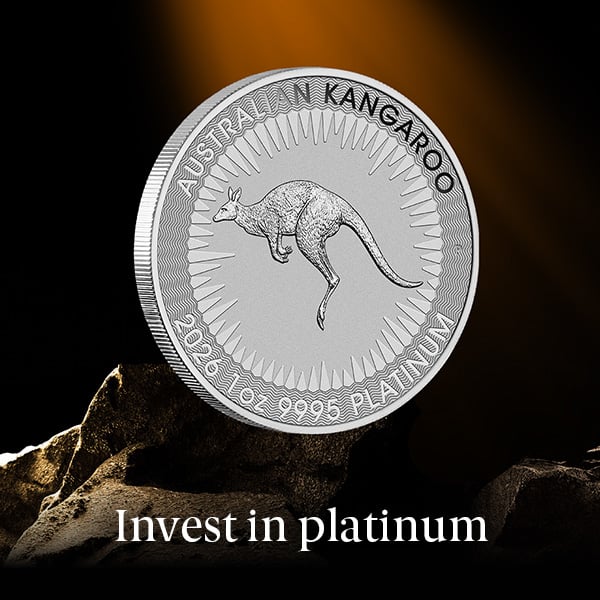


Should investors consider platinum?

For much of the 2000s, platinum traded at a premium to gold and significantly outperformed its precious metal counterpart. Since then, the relationship has reversed, with gold attracting greater investor attention and platinum frequently trading below the gold price.
However, the factors influencing investor interest in platinum have evolved considerably in recent years. Today, investors are increasingly assessing the metal not only as a precious metal, but also as a strategic industrial commodity with applications spanning emissions control, advanced manufacturing, artificial intelligence infrastructure, and the hydrogen economy. The platinum market is forecast to record a surplus for 2026 after three consecutive years of supply deficit platinum is attracting renewed interest.
What is platinum?
Platinum is a rare, silvery-white precious metal renowned for its durability, corrosion resistance, and catalytic properties. It belongs to a family of six platinum group metals (PGMs), which also includes palladium, rhodium and iridium.
Although platinum and gold occur in similar concentrations within the Earth's crust, platinum mine production is considerably lower and more geographically concentrated. This concentration can expose the market to disruptions from operational, geopolitical or energy-related challenges.
Beyond jewellery and investment products, platinum is widely used in automotive, chemical, petroleum, medical and electronic applications. Its greatest industrial value lies in its ability to act as a catalyst, accelerating chemical reactions without being consumed in the process.
Platinum's role in reducing emissions
For decades, platinum has been a critical component in catalytic converters, which reduce harmful emissions from internal combustion engine vehicles.
Despite the growth of electric vehicles, emissions standards continue to tighten in many jurisdictions, supporting ongoing demand for platinum-based catalysts. According to the World Platinum Investment Council (WPIC), automotive demand remains one of the largest contributors to platinum consumption, supported by increasingly stringent emissions regulations and continued substitution of platinum for palladium in selected applications.
While the long-term transition toward electrification may reduce demand from traditional vehicle markets, internal combustion and hybrid vehicles are expected to remain an important source of platinum demand for years to come.
Supply and demand dynamics
One factor currently influencing the platinum market is the ongoing imbalance between supply and demand.
WPIC forecasts the platinum market will record a modest surplus this year after three consecutive years of significant deficits, this is largely driven by investment outflows that occurred during the first half of the year, this coincided with a softening of the platinum price. This surplus does little to reduce the platinum market’s reliance on exceptionally lean and increasingly illiquid above ground stocks.
Green hydrogen and the energy transition
Perhaps the most significant long-term growth opportunity for platinum lies in the emerging hydrogen economy.
Platinum plays a critical role in proton exchange membrane (PEM) technologies used in both hydrogen fuel cells and electrolysers that produce green hydrogen. These technologies are viewed as potential solutions for decarbonising sectors such as heavy transport, steelmaking, chemicals and industrial manufacturing that are difficult to electrify.
The International Energy Agency's Global Hydrogen Review 2025 reported more than 200 committed low-emissions hydrogen projects worldwide, highlighting the strategic importance of hydrogen for energy security, industrial competitiveness and emissions reduction.
Although hydrogen-related platinum demand remains relatively small today, WPIC expects it to become a meaningful source of future consumption. The organisation estimates platinum demand linked to electrolysers and fuel cells could grow substantially by 2030 as hydrogen deployment accelerates.
Emerging applications
Beyond automotive and hydrogen technologies, platinum is increasingly being recognised for its role in advanced industrial applications.
According to recent WPIC research, platinum group metals are involved in technologies supporting data centres, optical communications, semiconductor manufacturing and other infrastructure associated with artificial intelligence and digital transformation. These emerging applications may provide an additional layer of long-term industrial demand.
Should investors consider platinum?
Platinum differs from gold in that a much larger proportion of demand comes from industrial uses. As a result, its price can be influenced by economic activity, manufacturing trends and technological developments as well as investor sentiment.
For investors seeking exposure to:
- precious metals diversification
- structural supply deficits
- the energy transition and hydrogen economy
- industrial growth themes
platinum may warrant consideration as part of a broader portfolio strategy.
While no investment is without risk, platinum's combination of constrained supply, growing industrial relevance and emerging clean-energy applications has strengthened its investment case compared with just a few years ago. With market deficits expected to persist and new demand drivers continuing to emerge, platinum is increasingly being viewed as more than simply a precious metal.
Disclaimer:
Any opinions expressed in this article are subject to change without notice.
This article and any links or materials referred to in it are provided for general information only and do not take into account your personal objectives, financial situation or needs. Nothing in this article constitutes financial, investment, legal, tax or other professional advice, and it should not be relied upon as a recommendation or opinion that any investment or strategy is suitable for you.
The Perth Mint is not a financial adviser. Before making any investment decision, you should consider whether the information is appropriate in light of your circumstances and consider seeking independent professional advice.
Information, data, prices, statistics and other content in this article have been obtained from sources believed by The Perth Mint to be reliable as at the date of publication. However, The Perth Mint does not represent or warrant that the information is accurate, complete, current or suitable for any particular purpose, and it has not been independently verified unless stated otherwise.
To the maximum extent permitted by law, The Perth Mint excludes all liability (including, without limitation, liability arising from negligence) for any loss or damage arising directly or indirectly from the use of, or reliance on, this article or any information contained in it.
Past performance is not a reliable indicator of future performance.

