





Meaning behind First Nations signage
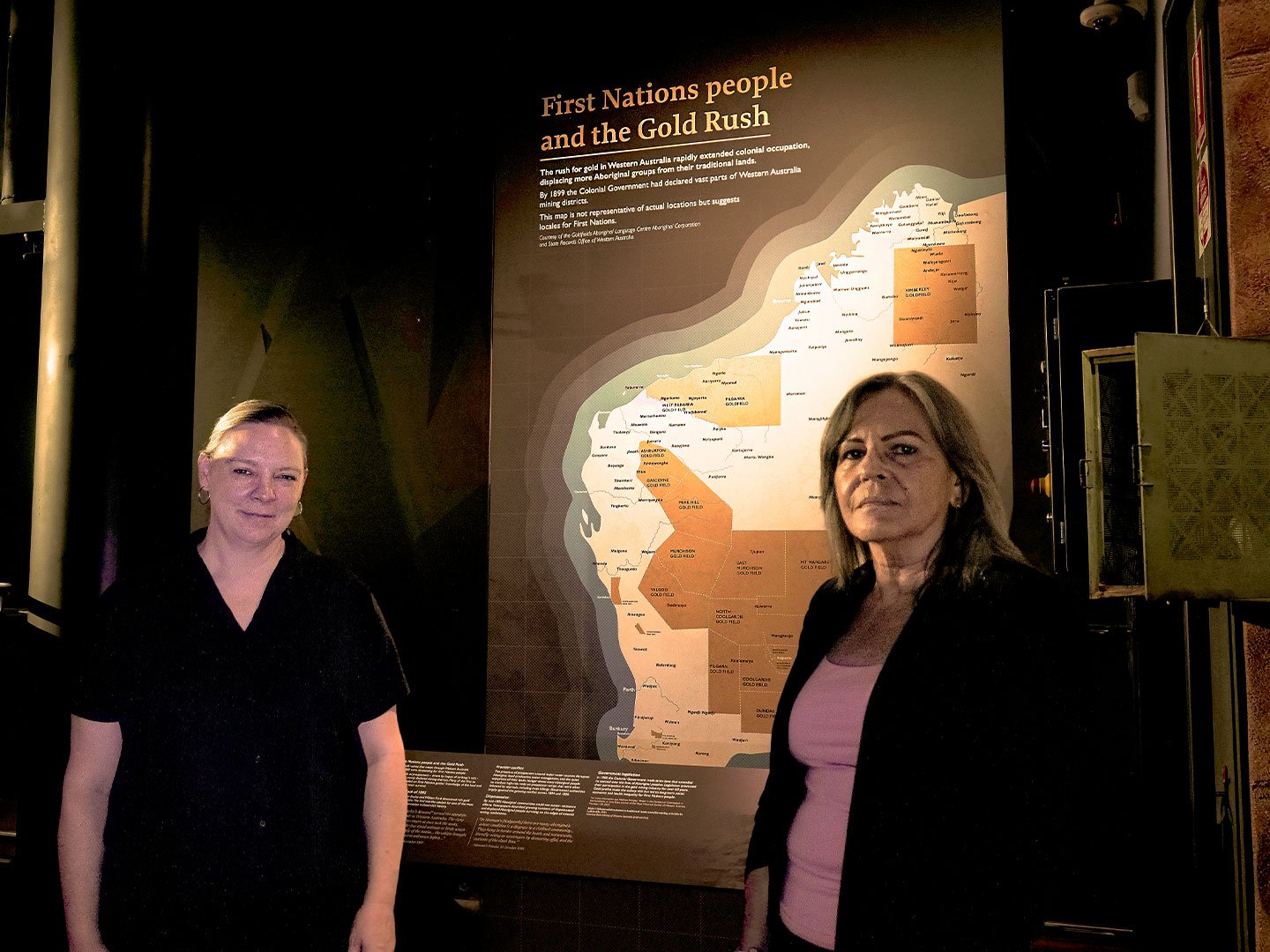
The Perth Mint has unveiled new First Nations signage within the exhibition area of our heritage building, marking an important step in our commitment to cultural recognition and truth telling.
To understand the deeper meaning behind this initiative, we sat down with key contributors - Natasha Fenner, Coordinator Heritage Collections and Curation and Denise Conway, Advisor First Nations Engagement.
The team explains what inspired the project, what the signage represents and how it marks an important milestone in the Mint’s reconciliation journey.
What inspired the creation of this signage project, and why was it important for The Perth Mint to take this step now?
Natasha: The signage project was undertaken to address a significant gap in the Mint’s exhibition interpretation. While the discovery and mining of gold in Western Australia is often celebrated as the economic turning point of the colony, this prosperity came at great cost to First Nations peoples who had lived in these regions for more than 45,000 years.
The Mint acknowledges a moral and ethical responsibility to truthfully communicate the full history of the State - including the impact of colonisation on Aboriginal peoples and their lands.
How do you define a “culturally safe space,” and what does that look like in the context of a heritage site like the Mint?
Denise: A culturally safe space is one where First Nations employees feel respected, heard and represented without fear of discrimination or misinterpretation. At a heritage site, this means working closely with Elders and Traditional Owners to ensure historical accuracy and respectful language, while acknowledging both the significance and the impact of First Nations contributions to the gold industry.
What key messages did you want visitors to understand through this signage?
Natasha: The signage highlights that the great rush to the Eastern Goldfields, beginning in 1892, triggered one of the fastest periods of colonisation in Australian history. Within just four years, colonial control spread across an area nearly twice the size of Tasmania as thousands of prospectors arrived.
Aboriginal people were treated brutally, exploited and dispossessed of their traditional lands. The key message is that while gold brought wealth to the colony, it also caused long-term social, economic and health inequities for First Nations peoples.
Can you walk us through the design process - how were the visual elements, language, and cultural references chosen?
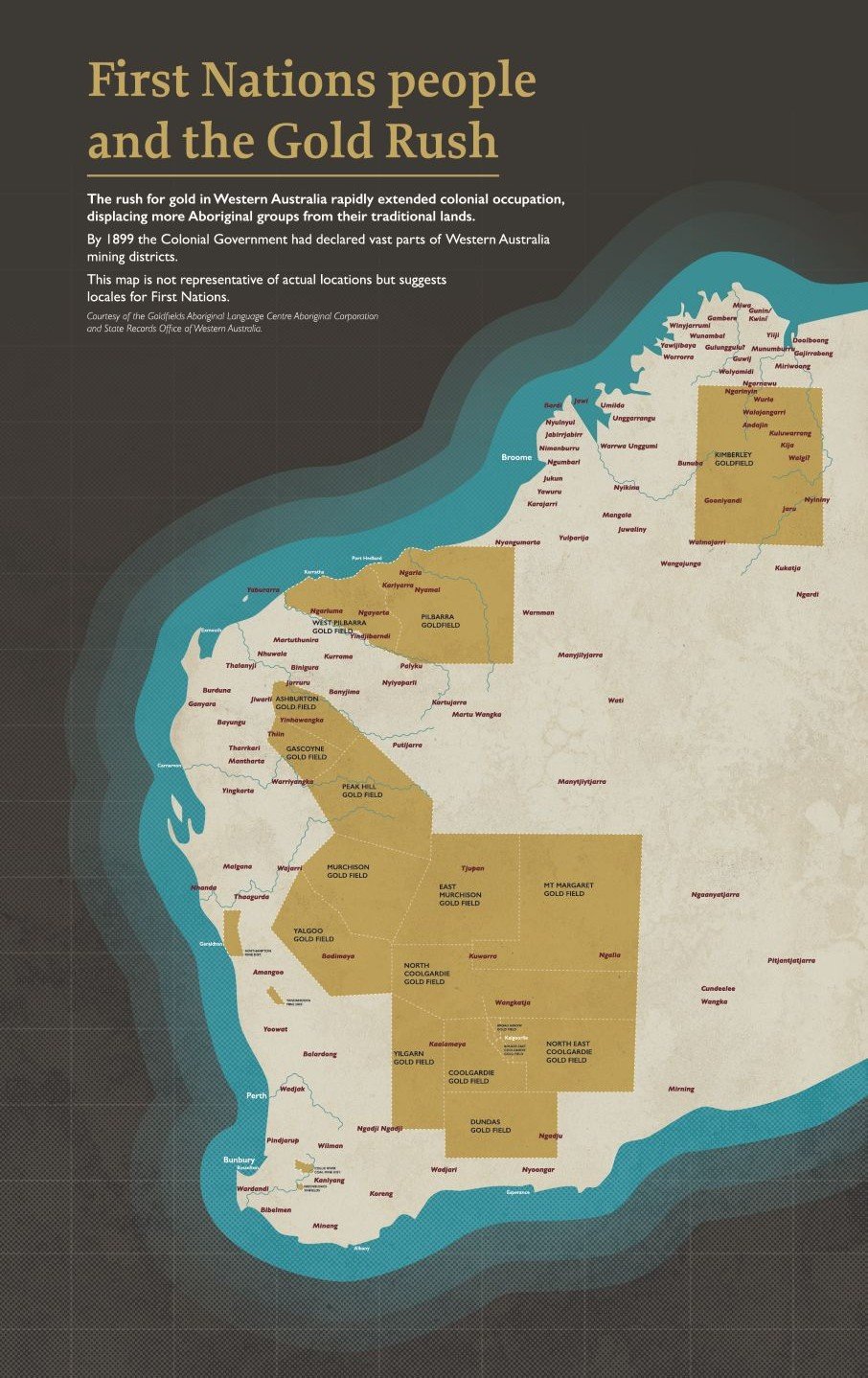
Natasha: The team chose a clear visual representation of the many Aboriginal language groups in Western Australia, acknowledging more than 45,000 years of continuous cultural presence. The Mint expresses gratitude to the Goldfields Aboriginal Language Centre Aboriginal Corporation (GALCAC) for allowing use of their Western Australian Aboriginal Language Groups Map.
Over this map sits another layer: the vast regions officially declared goldfields by 1899, the year the Mint opened. These imposed boundaries visually underscore the colonial expansion that overlooked Traditional Owners in favour of mining and economic ambitions.
Sharp boundary lines contrast with the names of Aboriginal language groups - a visual metaphor for competing worldviews of land and custodianship. The design also includes historical imagery showing the environmental destruction caused by early mining, such as the deforestation and scarring of land around Kalgoorlie by 1900.
How did you ensure the signage was both educational and respectful of cultural protocols?
Natasha: Respect was achieved through consultation. The Mint worked closely with GALCAC and drew on research by Matthew Wrigley, whose PhD examines the contact history of the Eastern Goldfields between 1861 and 1896. His work, shaped by consultations with Aboriginal groups across the region, provided critical insight into the speed and severity of colonisation.
How do you hope visitors will feel or think differently after engaging with the signage?
Denise: I hope visitors leave with a greater understanding of the resilience and contributions of First Nations people, particularly in the regions where gold was first discovered. It shows First Nations culture as a living, dynamic part of the Mint’s story and invites visitors to appreciate its significance.
What considerations were most important when balancing historical interpretation with cultural sensitivity?
Denise: Accuracy and authenticity. The priority was truth-telling and honouring the experiences of Aboriginal and Torres Strait Islander peoples. We focused on accuracy and authenticity, and consultation with Traditional Owners and organisations like GALCAC to ensure the language, tone and historical framing were respectful and correct.
How does this project fit into the broader journey of cultural safety and reconciliation at The Perth Mint?
Denise: This project is a foundational step toward reconciliation. It embeds First Nations perspectives into the Mint’s storytelling and demonstrates a commitment to truth, respect and inclusion.
It ensures culture is visible and respected and helps embed cultural protocols into everyday visitor experiences. It moves us beyond symbolic gestures and into meaningful, ongoing action.